
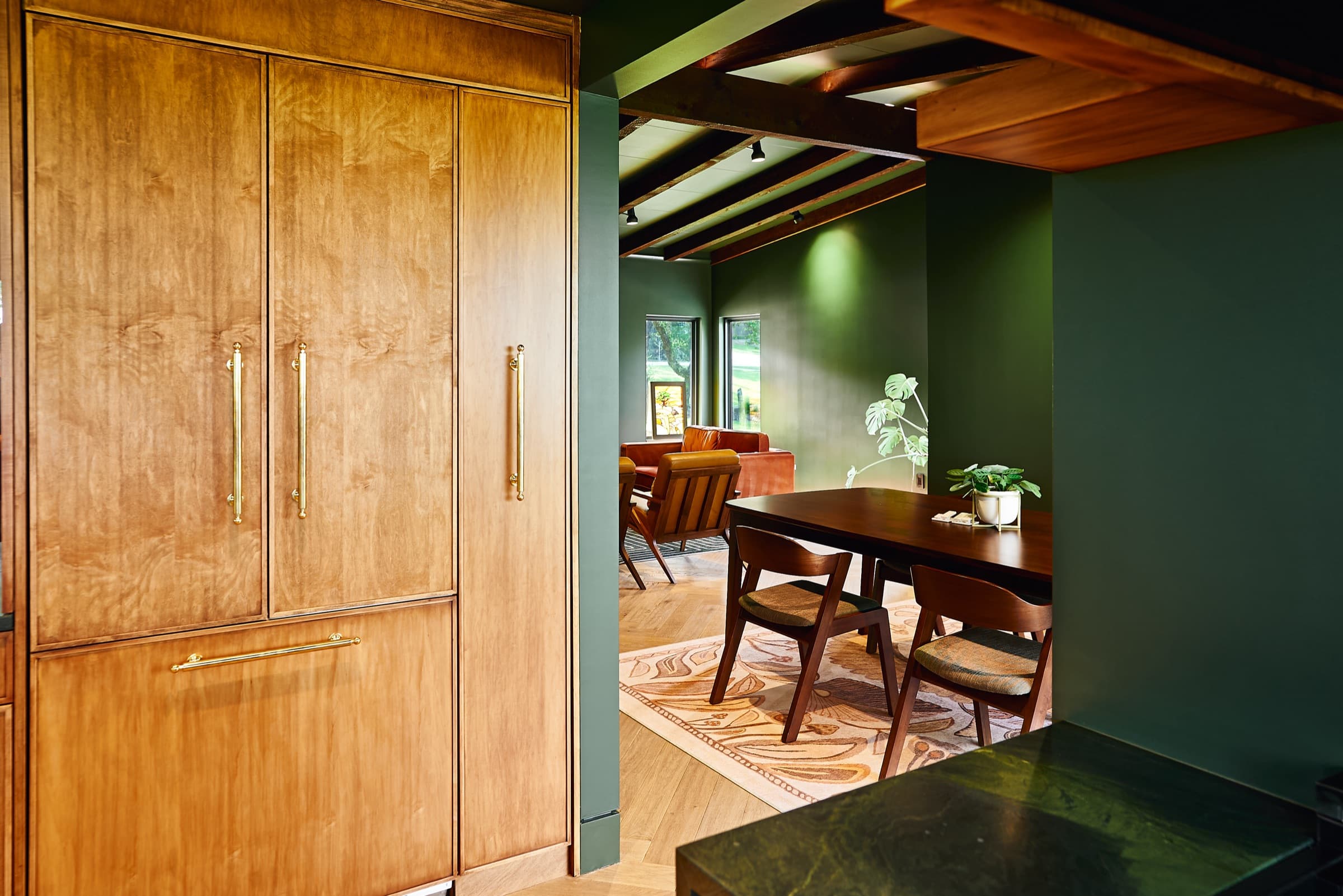
The single most common surprise during a finish-out punch list: a homeowner walks into the kitchen on move-in day and the cabinets read green when the sample read gray. The cabinets are fine. The lighting is doing the talking.
Why this happens
Paint reflects whatever light source is in the room. A neutral gray under a 3000K downlight looks completely different under a 4000K under-cabinet LED or a 2700K pendant. The color you saw on the showroom sample was lit with one set of bulbs, the kitchen has another.
Compounding the problem: cheap LED bulbs have low color rendering index (CRI). A CRI of 70 distorts paint significantly. CRI 90+ shows the paint accurately. Most builder-grade lighting ships at CRI 80, which is the bottom of acceptable and the top of cheap.
Three light variables that matter
- Color temperature (Kelvin): 2700K is warm, 3000K is neutral-warm, 4000K is cool. Custom kitchens almost always want 2700K to 3000K. Anything over 3500K reads clinical.
- Color rendering index (CRI): minimum 90 for finish-sensitive spaces. CRI 95+ for primary kitchens, art lighting, and any wall with a hand-painted finish.
- Beam angle and shielding: narrow beams (25 degrees) wash a vertical cabinet face. Wide beams (60 degrees) flood a ceiling. Mixing the two without thinking creates hot spots that read color-shifted.
Our cabinet color spec process
- 01Get a real cabinet door sample (not a chip card) painted in the exact finish, sheen, and topcoat the production cabinets will use.
- 02Get a real bulb sample matching the spec you plan to install. Not from a hardware store. From the same SKU your electrician will pull.
- 03Hold the sample door under that bulb in the actual kitchen at the actual time of day you care about most.
- 04If the room reads materially different from the showroom, change the bulb spec or the paint, not both at once.
The under-cabinet LED trap
Under-cabinet LED tape gets installed last and is rarely sampled during cabinet color review. It is often a different color temperature and CRI than the ceiling downlights. The result: countertops and the upper cabinet faces read different colors at the same time of day.
Bijou spec: under-cabinet LED tape at the same Kelvin as the downlights, CRI 90+, dimmable, and aimed away from the back wall to avoid washing the cabinet face directly.
Daylight is a variable too
Window glazing matters. Low-E coatings can shift natural light cool or warm depending on the SHGC and visible transmittance. If the kitchen has a big window or sliding glass door, evaluate the cabinet sample at three points in the day: 9 AM, 1 PM, and golden hour. If you only love it at one of those times, you have a problem.
Simple checklist before you sign off on cabinet color
- Sample painted to the exact finish, sheen, and clear-coat
- Sampled in the actual kitchen, not the design studio
- Sampled under the actual bulb spec, not generic LEDs
- Reviewed at multiple times of day if the kitchen has direct daylight
- Under-cabinet LED tape Kelvin and CRI confirmed to match the downlights
Related project
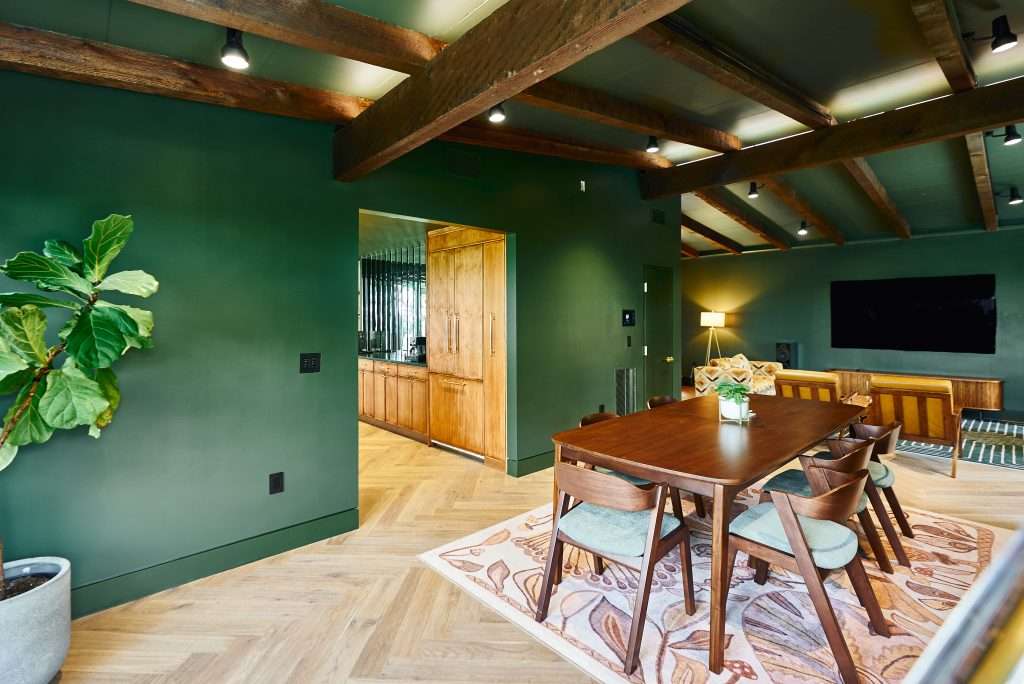
See the Barton Creek Vintage View kitchen
Barton Creek, Westlake, Austin, TX