
Bijou Custom Spaces · Austin, TX
A gym you'll
actually use.
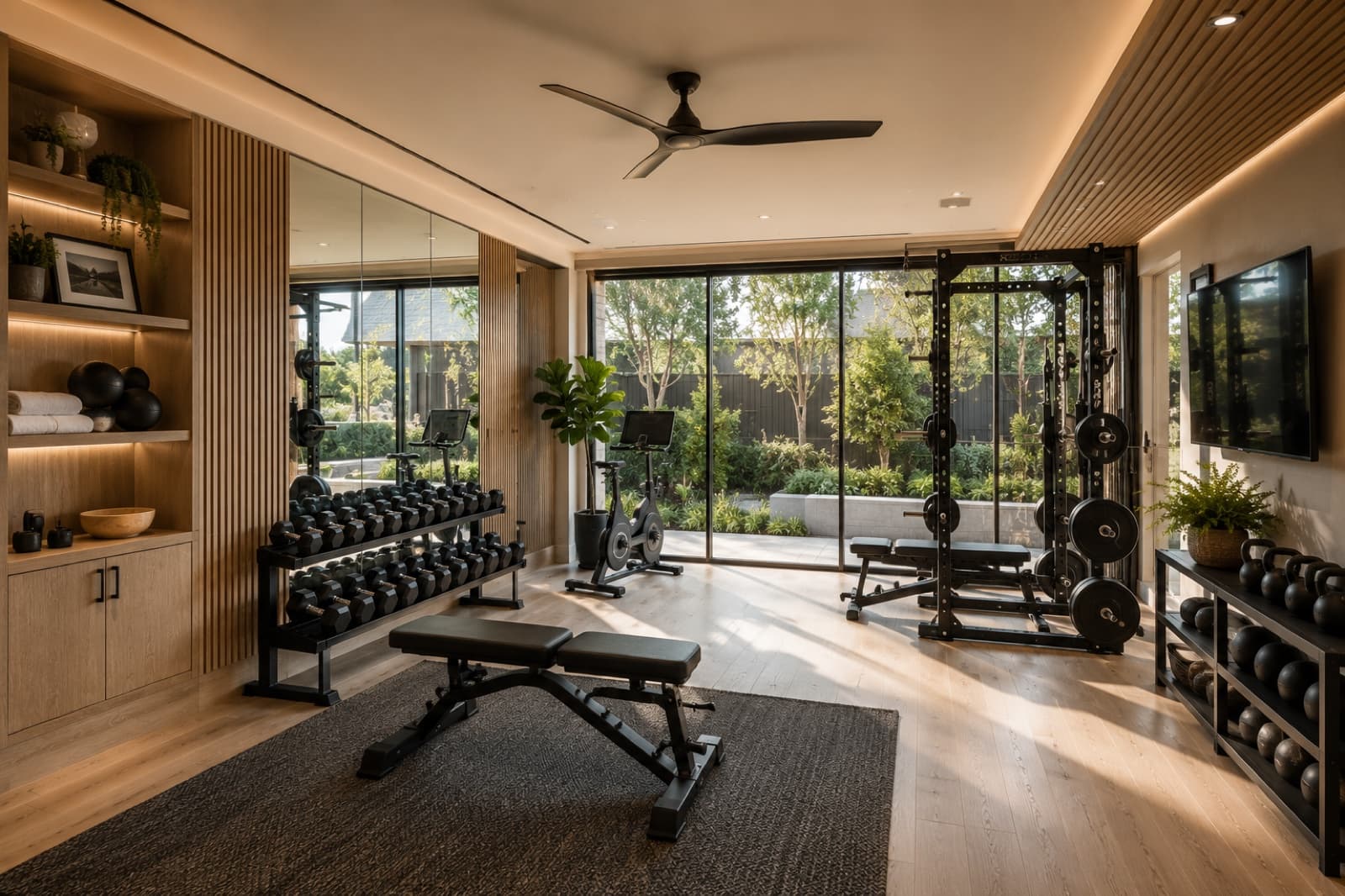
The home gyms that get used are the ones built like real training spaces: floors that take dropped weight, air that moves, mirrors that sit flat, and equipment anchored where it belongs. We build the room so the workout is the only hard part.
The Difference
Built right, from the studs out.
Floors built for load
Rubber over a properly prepped subfloor, rated for dropped dumbbells and a loaded rack. On upper floors we address the structure so the deadlifts do not travel through the house.
Air, light, and mirrors
Dedicated ventilation so the room stays fresh, natural light where the site allows, and mirrored walls set flat and true. Small things that decide whether the room feels like a gym or a closet.
Anchored and wired
Racks, rigs, cable machines, and mounted screens anchored into real backing, not drywall. Power and data run for the peloton, the sound system, and the fan you will absolutely want.
Step Inside — Drag to Look Around
Asked Often
Answered plainly.
Can you build a home gym on a second floor?
Yes, but it takes engineering. Upper-floor gyms need structural review for both load and sound, especially for free-weight training. We assess the framing and detail the floor so the room performs without shaking the house.
What flooring is best for a home gym?
For most home gyms, high-density rubber over a prepared subfloor handles dropped weights, protects the slab, and cleans easily. The right thickness depends on how you train, which we scope during the site walk.
Do I need special ventilation for a home gym?
You want it. A conditioned, well-ventilated room is the difference between a gym you use and one you avoid. We design HVAC and airflow into the build rather than treating it as an afterthought.
See every specialty room we build on the Custom Spaces overview.
Tell us what you want to build.
The site walk is free, and you will leave with an honest range. That is how every Bijou project starts.