
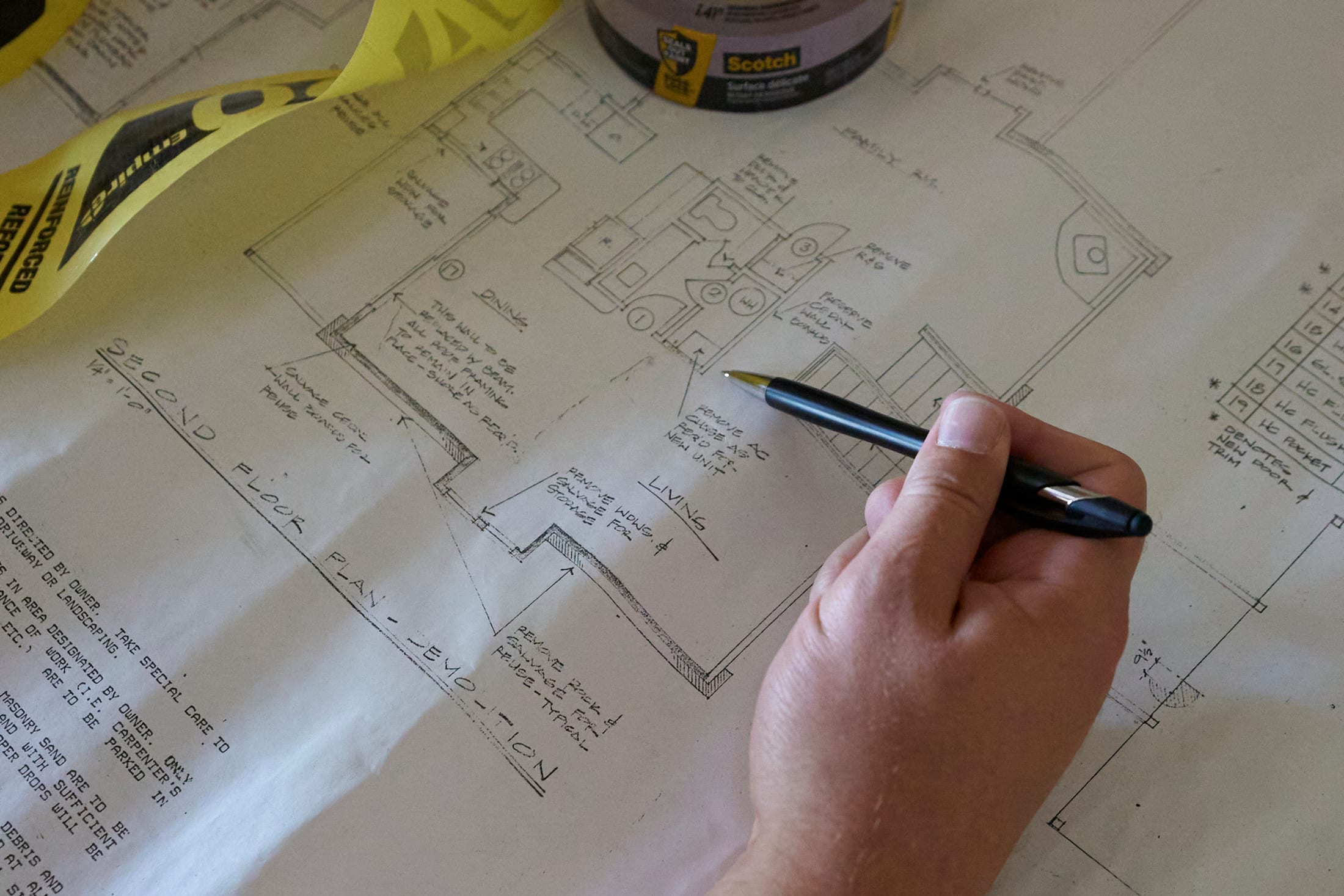
Most builder bids are not apples to apples. That is the honest answer. Two bids on the same project can land $250,000 or $300,000 apart on a million-dollar job, and the client is left staring at two numbers with no idea where the gap came from.
The builder who came in low is not going to tell you. That part is on you to figure out before you sign anything.
The 16 Divisions. The ~50 Line Items. Count Them.
There are 16 construction cost code divisions used in remodeling and new builds. Almost every builder in the business uses the same ones or something close. Underneath those divisions, a real bid breaks down into something like 50 line-item sub-categories. That is the full shape of a project's cost.
If the bid in front of you doesn't get anywhere near that level of detail, it is not a bid. It is a number designed to get your signature.
“The bid that wins on price is usually the bid that didn't do the work. You're not getting a deal — you're getting a down payment on a change order.”
— Beckett Stone
What a Real Bid Actually Specifies
Put both bids side by side and go line by line. A thorough bid names things. A thin bid leaves room. Here is what should be spelled out:
- Window specifications
- Insulation specifications
- Who the drywall teams are
- Porta-can and construction fencing
- Extra labor carried for miscellaneous items
- Line items down to the nitty-gritty across every cost code
If those things aren't named, they are either excluded or sitting inside an allowance that will move the second real selections get made. That is where a cheap bid hides.
Notice what's on that list. Fencing. A porta-can. Nobody is dreaming about construction fencing. But a builder who bothered to price the fencing is a builder who went through the whole job. A builder who skipped it skipped other things too, and the other things cost more than fencing.
Thick Bid, Thin Bid
You can usually see the problem just by holding the two documents. One is thicker. One is thinner. The thick one took more hours to produce, and those hours are the builder doing the thinking before the project starts instead of billing you for surprises after it does.
Take a really deep look at both and you will typically see why one is more thorough than the other. It is not subtle once you know to look.
Why Builders Underbid on Purpose
There are a lot of builders in this town who underbid to win the contract with the full intention of change ordering their way back to profit. The cover story is always the same: the client didn't give 100% of the information up front.
Here is the thing. No client gives 100% of the information up front. We expect that. Nobody has every selection made at bid time, and pretending otherwise is fantasy. The question is whether a builder treats that as a normal condition of the work or as an opening to exploit. A lot of them treat it as the opening.
The defense is a bid detailed enough that there isn't much left vague to exploit.
The 70% Hard-Bid Standard
Not everything can be locked before contract. Some selections genuinely aren't made yet. But roughly 70% of the project should be hard-bid before you go under contract. That is the number that minimizes your financial risk on a job this size.

Hard bid means a real sub gave a real price on real scope. Not an allowance. Not a placeholder. A price someone is standing behind.
Ask any builder you are talking to what percentage of their bid is hard-bid versus allowance. The answer tells you almost everything. A builder who has done the work will give you a number. A builder who hasn't will give you a feeling.
What You're Actually Choosing
A thorough bid is not a sales document. It is the first evidence of how a builder intends to operate once the job is running. Time spent on the bid is time spent understanding your project. The alternative is a builder who threw a little time at a number and plans to hand you a different one later.
That is the choice. Not the cheaper bid versus the expensive bid. The bid someone did the work on versus the bid someone didn't.
“Don't compare the two numbers. Compare the two documents. The number is an opinion. The document is the evidence.”
— Beckett Stone
Want a Bid That Actually Tells You Something?
Bring us your project. We'll show you what a thorough, line-item bid looks like — and you'll have a real basis for comparison.
Start a Project