
The problem with quartz
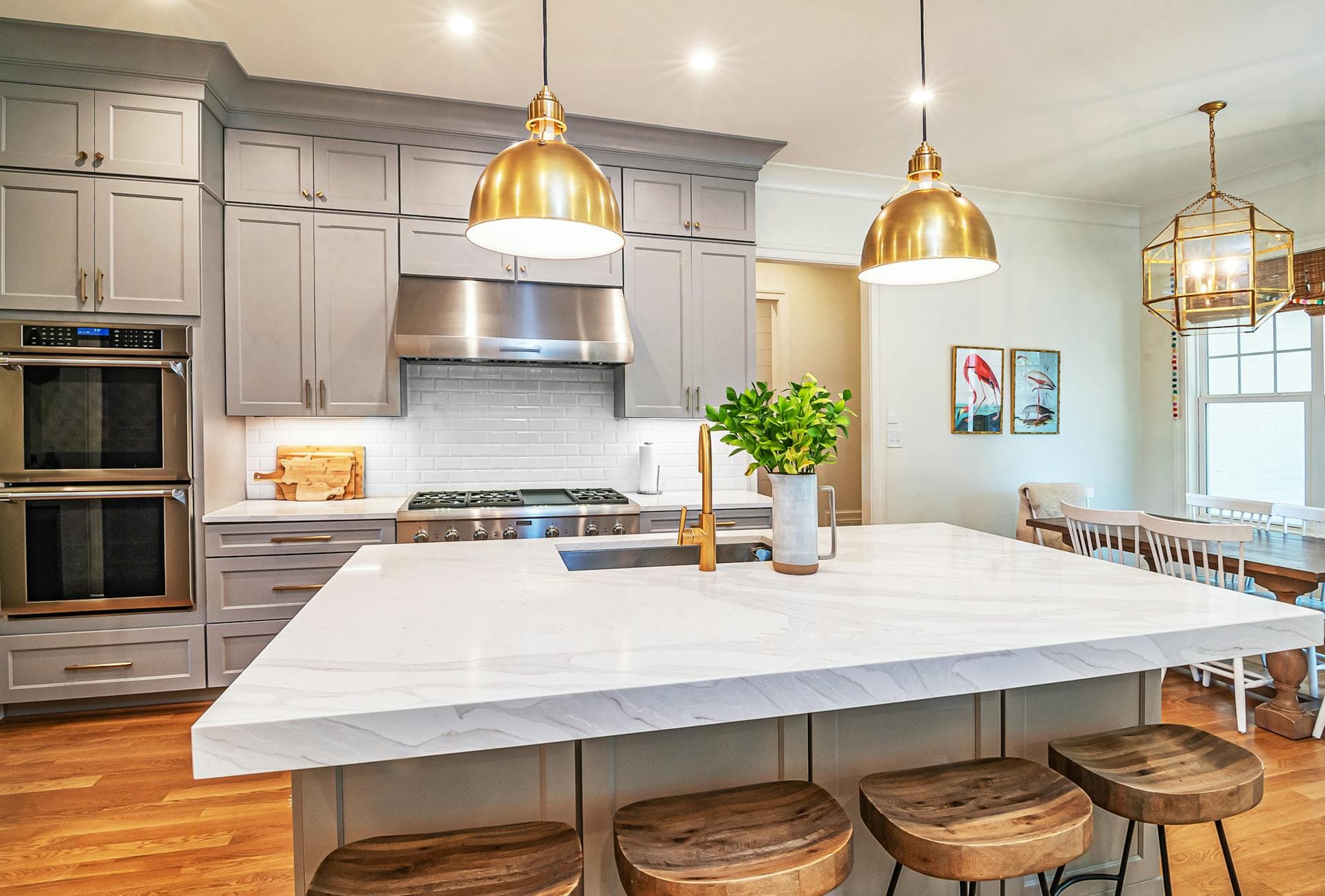
I walked into three Westlake homes last week. Different streets, different architects, different budgets. Same kitchen. Same quartz counter. Same beige veining in the same direction in the same finish. It was like somebody had emailed every Austin general contractor a single PDF and said this is what kitchens look like now.
Quartz is not a bad product. It is engineered stone, made from crushed quartz crystals bound with resin, and it is durable, stain-resistant, and consistent. That is exactly the problem. It is the engineered consistency of it. Every slab looks like every other slab. Every kitchen looks like every other kitchen. You are paying $80 a square foot for a counter that looks identical to the one your neighbor just installed. That is not luxury. That is a Costco rotisserie chicken in slab form.
What luxury counters actually do
A real counter does three things quartz cannot. First, it is unique. Natural stone is geologic. Every slab is one of one. The veining tells you what the earth was doing four hundred million years ago. Second, it ages. The best counter materials get better over time as they patina and soften. Quartz cannot patina because resin does not weather. It just sits there until it scratches. Third, it tells a story. Somebody quarried the stone. Somebody hand-selected the slab. You can stand in your kitchen and explain where the counter came from. That is the difference between a house and a home.
Three counters I spec every time
These are the three I keep coming back to. Each one is a different price, a different feel, and a different conversation. One client will love the bright drama of Taj Mahal. Another will fall hard for the matte calm of soapstone. The marble crowd is its own thing entirely. All three beat quartz. Every time.
1. Taj Mahal Quartzite
Quartzite is not quartz. Different rock, different rules. It is a natural stone, quarried in slabs, harder than granite, basically impervious to acid, and the variety called Taj Mahal is the one that has been quietly replacing white Calacatta marble in the cellars and kitchens I have been finishing for the last three years. Soft cream background, subtle gold veining, a movement that looks like still water in a pond. The slabs are big enough to do a full island in one piece without a seam. I just specced this in a Tarrytown remodel and the client called me back the next day asking where it had been all her life.
The quartzite
Taj Mahal Quartzite — cream and gold natural quartzite from Brazil. The marble look without the maintenance. $90-120/sqft.
See Beckett's Pick2. Vermont Soapstone
Soapstone is the move when the client wants something honest. It is a soft, dense, talc-based stone that has been used in American kitchens since before electricity. The color starts charcoal grey and develops a deeper, almost black patina over the years as you rub mineral oil into it. It cannot stain. It cannot etch. You can set a hot cast iron skillet on it without thinking. It scratches, but the scratches just become part of the story. The Vermont quarries (M. Texeira, Glendyne, Mt. Vernon) are the best soapstone in North America. I put this in a Liberty Hill ranch house last year and it has aged into the most beautiful counter I have ever specced.
The soapstone
Vermont Soapstone — quarried in the Green Mountains, ages into a near-black patina over decades. The most honest counter material made. $70-90/sqft.
See Beckett's Pick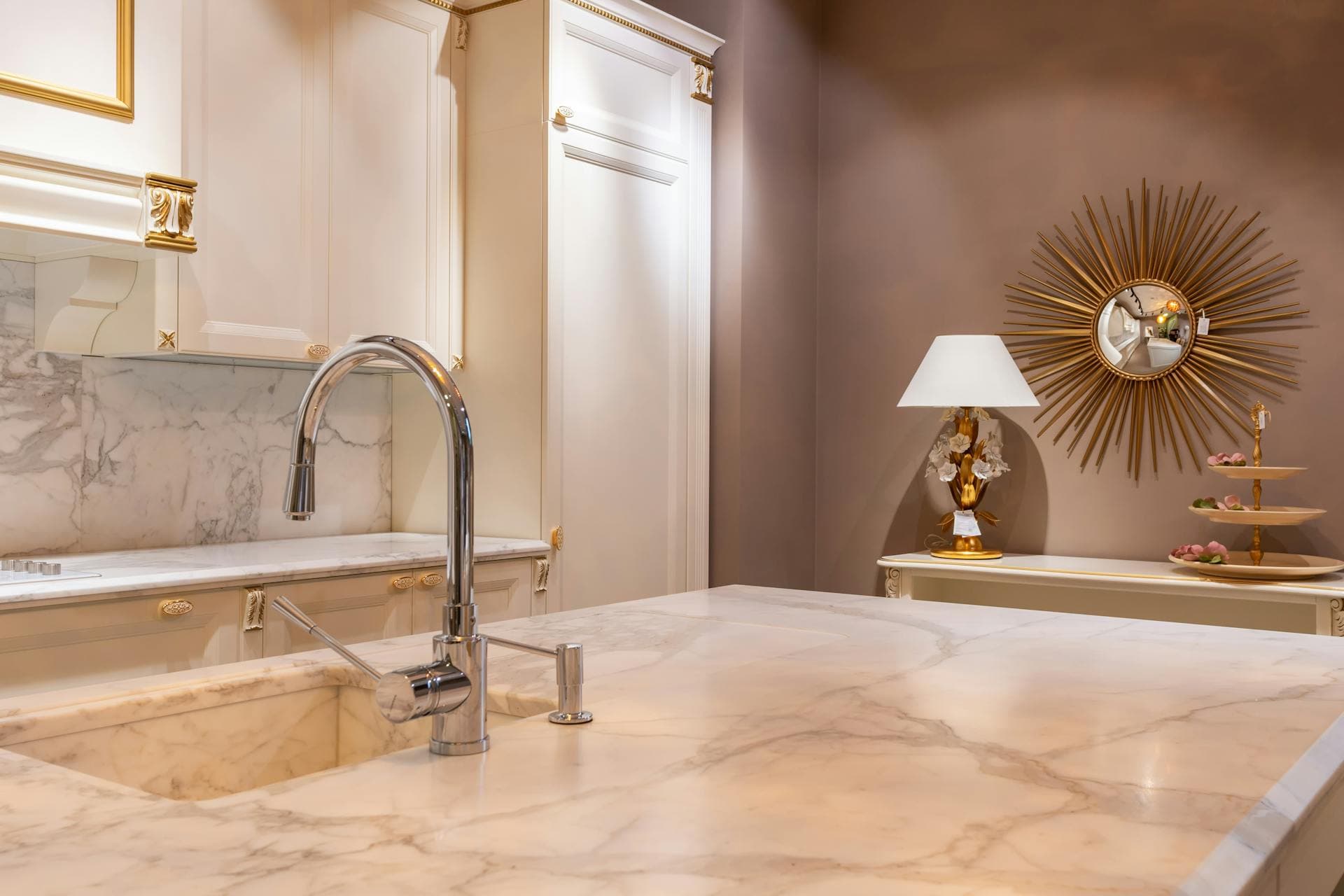
3. Honed Calacatta Marble
Marble is the divisive one. Every client asks about it. Half of them then ask me to talk them out of it. I will not. Calacatta from the Carrara region of Italy is one of the great natural materials of the last two thousand years and a properly specced marble counter is the most beautiful surface you can put in a kitchen. The trick is to hone it. Polished marble is what your dentist has on his lobby floor. Honed marble has a soft matte finish that hides the small etches that lemon juice and vinegar will inevitably leave. It will etch. It will patina. Embrace it. The wealthiest, most-traveled clients I work with always pick marble. They know it is going to age and they want it to.
The marble
Honed Calacatta Vagli — Italian marble with dramatic grey veining and a matte finish that ages beautifully. The forever counter. $150-200/sqft.
See Beckett's PickHow to actually pick the slab
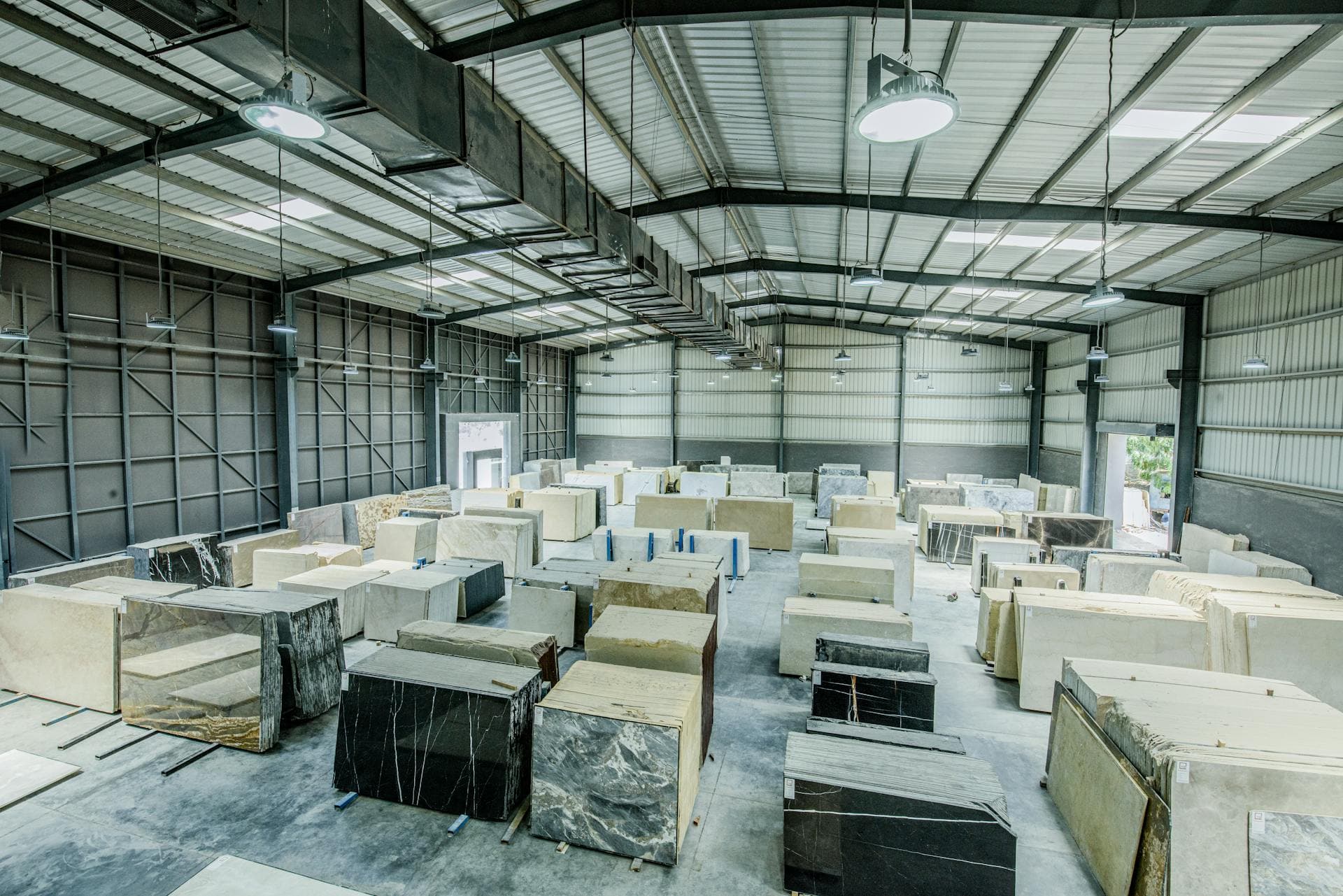
Do not let a fabricator email you a tile of a sample. Walk the slab yard. The good Austin stone yards (Aria Stone Gallery, Materials Marketing, Architectural Tile and Stone) keep their inventory standing upright in racks. Walk between them like you are at a bookstore. Find the slab you love. Take a photo standing next to it. That is the slab that goes in your kitchen. Do not buy by name, do not buy by sample, do not buy by Pinterest. Buy the actual slab.
Numbered slabs travel in book-matched pairs from the quarry. If you have a large island and a back run of counter, you can match the veining so it looks like the stone flows through the room. Most builders will not bother. Ask for it. It is the kind of detail that is invisible until it is there and unforgettable once you see it.
“Quartz is a Costco rotisserie chicken in slab form. Predictable, safe, identical to the one your neighbor just bought.”
— Beckett Stone
The bigger picture
Counters are the surface every visitor touches. They are the first thing somebody runs a hand across when they walk into your kitchen. The slab you pick is one of the four or five material decisions in a remodel that is going to determine whether the room feels generic or feels specific to you. Get it right and everything around it gets easier. The cabinets relax. The hardware works harder. The lighting flatters the stone instead of fighting it.
Quartz is the safe default. The default never wins. Pick the slab.
Build a kitchen worth keeping
Every kitchen we build at Bijou starts with a slab walk. We take you to the yard, you pick the stone, we design the room around it. That is how every detail downstream falls into place.
Start the Conversation