
The Number You Came For
Four to six months. That's the typical timeline for an interior remodel where we aren't touching drywall or MEP systems. A kitchen and a primary suite lands squarely in that window.

If the scope is tighter — a straightforward kitchen, a straightforward bath — two to three months is realistic. That's the fast lane. Most people reading this aren't in it, because most people remodeling a kitchen and a primary suite at the same time are also moving something behind the wall.
And that's where the schedule changes.
MEP Is the Line That Splits Every Timeline
Mechanical, electrical, plumbing. Touch any of it and add two to three months minimum to whatever your base timeline was. Not as a worst case. As the base case.

People hear that and assume it's padding. It isn't. It's permits, it's inspections, it's sequencing trades who can't start until the trade before them passes. It's the rough-in that has to be signed off before anybody closes a wall. The clock isn't running on labor the whole time. It's running on process, and process doesn't care about your move-in date.
So the real question on a kitchen-plus-primary isn't "how long." It's "am I moving plumbing." Answer that first and the schedule answers itself.
“The schedule isn't set by how big the room is. It's set by whether you're touching the pipes.”
— Beckett Stone
The Slab Nobody Budgets For
Here's the part that catches people. A full gut interior remodel almost always involves moving plumbing. Moving plumbing in a slab-on-grade house means slab work — chipping up the concrete, re-routing the lines, pouring back.
That is real time and real money, and it is almost never obvious to a client standing in their kitchen with a drawing in hand. Budget for it even when nothing on the plan says "concrete."
If you want to protect the schedule, the lever is right here. Keep the plumbing where it is and you keep the base timeline. Move it, and you've bought yourself the longer calendar.
Where Your Project Sits on the Bigger Scale
Context helps. Here's how the schedules stack up across scope:
- Straightforward kitchen or bath: two to three months.
- Interior remodel, no drywall or MEP work: four to six months.
- Full luxury home remodel, no drywall or MEP: six to eight months.
- Full luxury home remodel with drywall pulled and MEP updated: nine to twelve months.
- Anything over roughly 4,000 square feet: budget twelve to fourteen months.
A kitchen and a primary suite is not a full-home remodel. Don't let anyone schedule it like one. But don't talk yourself into the two-month fantasy either, because two rooms with wet walls in both of them is not a single-room job.
The Costs That Live Behind the Drywall
We tell every client the same thing: remodels carry hidden costs behind the walls that can't be scoped until the drywall comes down. We don't know what's there before contract. Nobody does. Anyone who tells you otherwise is guessing with confidence.
That's not a disclaimer to protect the builder. It's the reason a remodel schedule needs slack in it. Open a wall, find something, solve it. The projects that run long are rarely the ones with surprises. They're the ones that had no room in the schedule for a surprise.
The Two Line Items That Decide Whether It Looks Expensive
While we're talking about where the money and the time go — cabinets and paint. Those are the two line items clients most often try to cut. They're also the two items that most visibly separate a luxury remodel from a standard one.
We push back hard on that one. Paint and cabinet finishes are the biggest telltale signs of a real luxury remodel, and clients are routinely sticker-shocked by what both actually cost. Which is exactly why we put those numbers on the table early in scoping instead of letting them land as a surprise in month three.
Finish level is the single biggest variable determining final construction cost on a luxury remodel here. Not square footage. Not the appliance package. The finish level. And good cabinet and paint work takes the time it takes — that's labor, and labor, not materials, is the biggest cost driver on a high-end custom remodel.
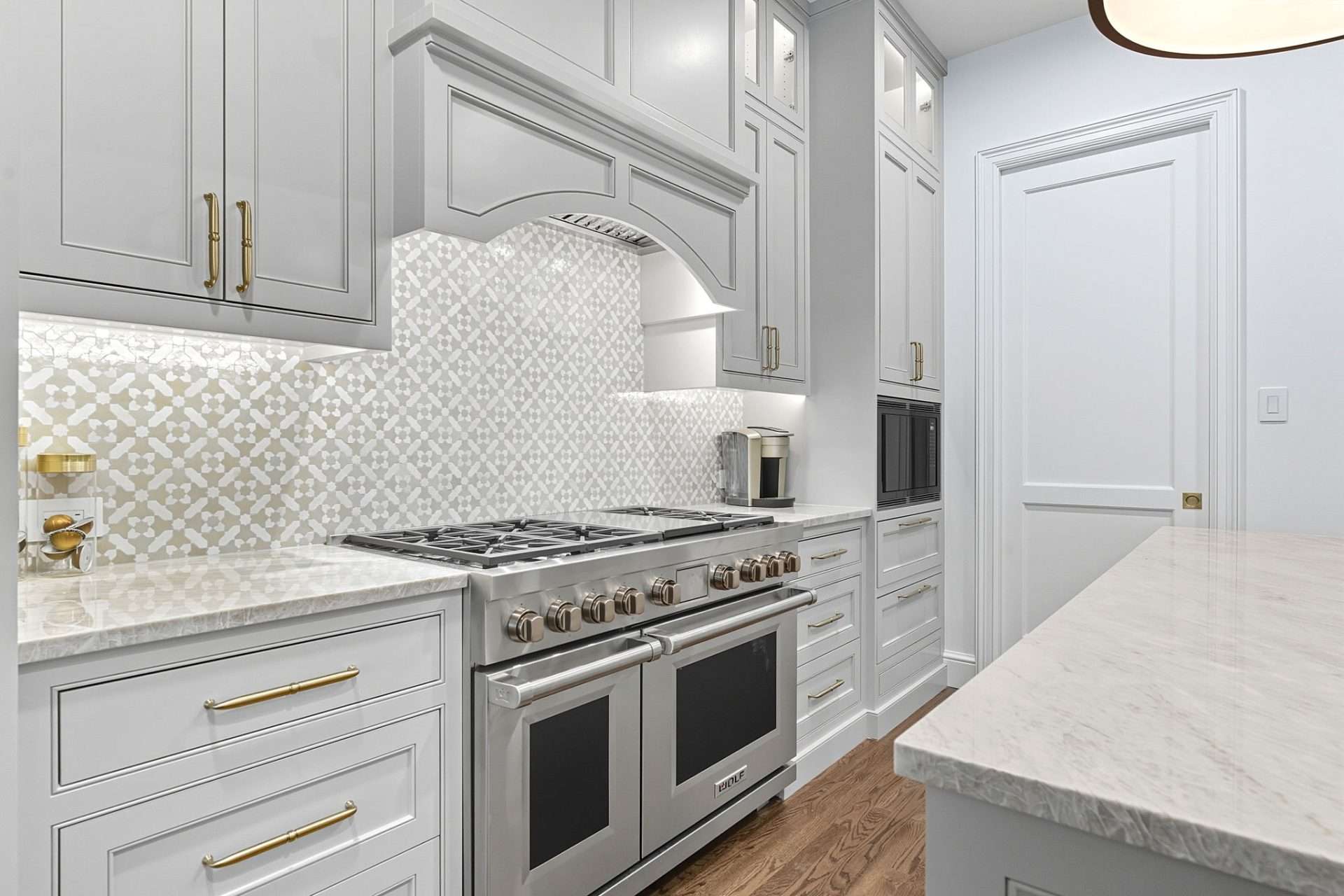
“Thin the cabinet and paint budget and you've just spent six months building something that reads builder-grade from the doorway.”
— Beckett Stone
How To Plan It
Decide early whether plumbing moves. That one answer sets your schedule and most of your contingency.
If the layout works and you're after new finishes, hold the base timeline and spend the money on cabinets and paint. If the layout genuinely doesn't work, move the plumbing — but go in knowing you've added months and slab work, and plan the calendar around that instead of around hope.
Either one is a good project. The bad project is the one that was scoped like the first and built like the second.
Let's Put a Real Schedule On It
Tell us what you want to change in the kitchen and the primary suite, and we'll tell you whether it's a four-month job or a nine-month one — before you sign anything.
Start a Project