
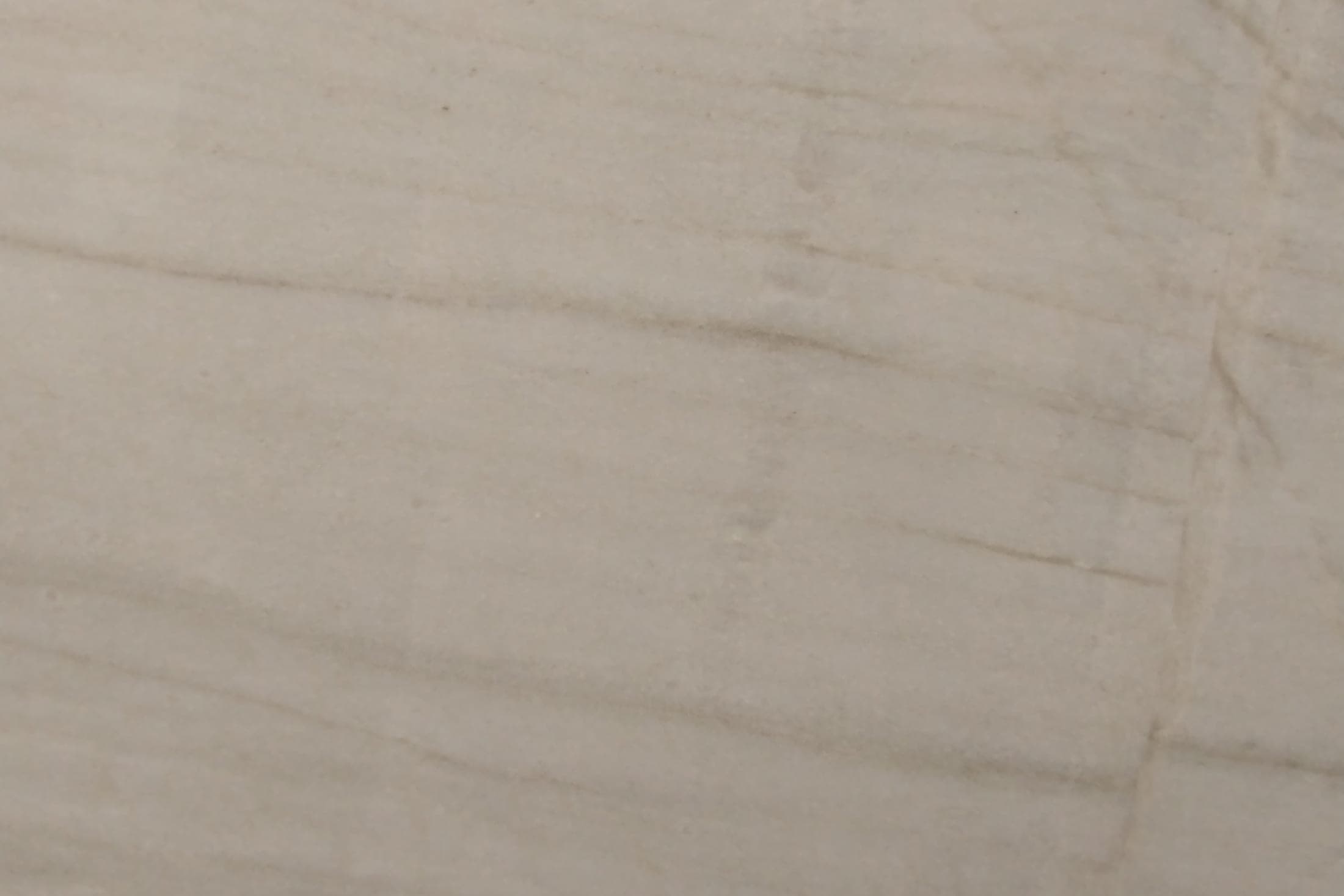
Taj Mahal quartzite is the single most-specced stone in the luxury Austin remodel market right now, and it deserves to be. Brazilian. Cream background. Soft gold veining. Harder than granite. It will not etch from lemon juice or vinegar. Ninety to a hundred and twenty a foot installed. Rating: the move.
From across the room it reads like still water. Then you walk up and stand over it and it reads like geology. That gap between the two views is the whole reason this stone wins. Marble does that. Engineered quartz never has and never will.
What It Actually Is
Quartzite starts as sandstone. Heat and pressure fuse the quartz grains into a single interlocked mass. What comes out is silica, and silica is hard. Harder than granite. It is not calcium carbonate, which is what marble is, which is why marble surrenders to anything acidic. Lemon, vinegar, wine, tomato, a splash of orange juice you did not see. Marble etches on contact. Taj Mahal does not care.
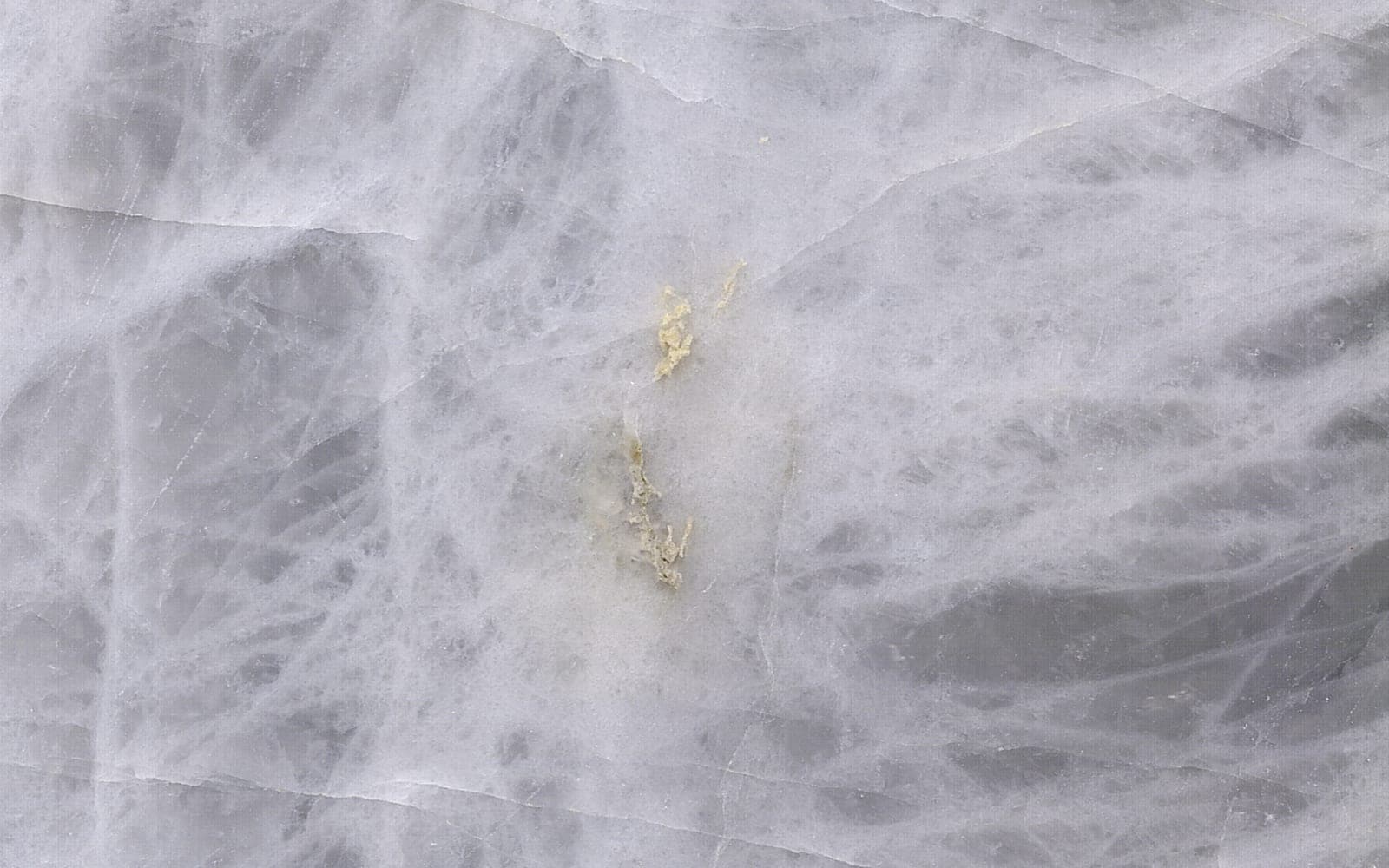
That means a normal human can cook in the kitchen. Hot pan straight off the burner. Chop directly on it if you want to ruin your knives. Oil around the cooktop. Properly sealed, it is basically bulletproof. You stop babysitting the counter, which is the actual reason people who love marble end up hating marble.
The Big Slab Advantage
Here is the part that separates a good Taj Mahal kitchen from a great one. The slabs come big. Big enough to do an entire island top in one piece. No seam. Not a tight seam, not a well-matched seam. No seam.
If you are doing a big island, go see the slabs in person before anyone cuts anything. Aria Stone Gallery and Materials Marketing both carry it here. Walk the racks. A photo will not tell you what the movement does at the corner of the island where everybody stands. And if you want a book-match, you need sequential slabs off the same block, pulled and tagged together. Ask for that at the yard, not on install day.
Where It Fails
Nothing is bulletproof out of the box. Quartzite is porous, some blocks more than others, and porosity varies within the same name. If it is under-sealed, water sitting under a dish rack or a wet sponge will darken the stone. It usually comes back as it dries. Oil is the one that sometimes does not. Seal it right at install and reseal on a real schedule instead of whenever you remember.
Second failure point is the fabricator, not the stone. Quartzite is hard, which is great for you and hostile to tooling. A shop running worn blades and cheap bits will chip the edges and burn the polish. Fabrication of hard stone is a skill. Pay for the shop that does it every week.
Third is the name itself. There is a lot of material on the market sold as quartzite that is dolomitic marble wearing a quartzite label. It looks similar in the rack and behaves completely differently in a kitchen. Test it. Acid on a sample, in an inconspicuous spot, at the yard. If it dulls, walk. Real quartzite shrugs.
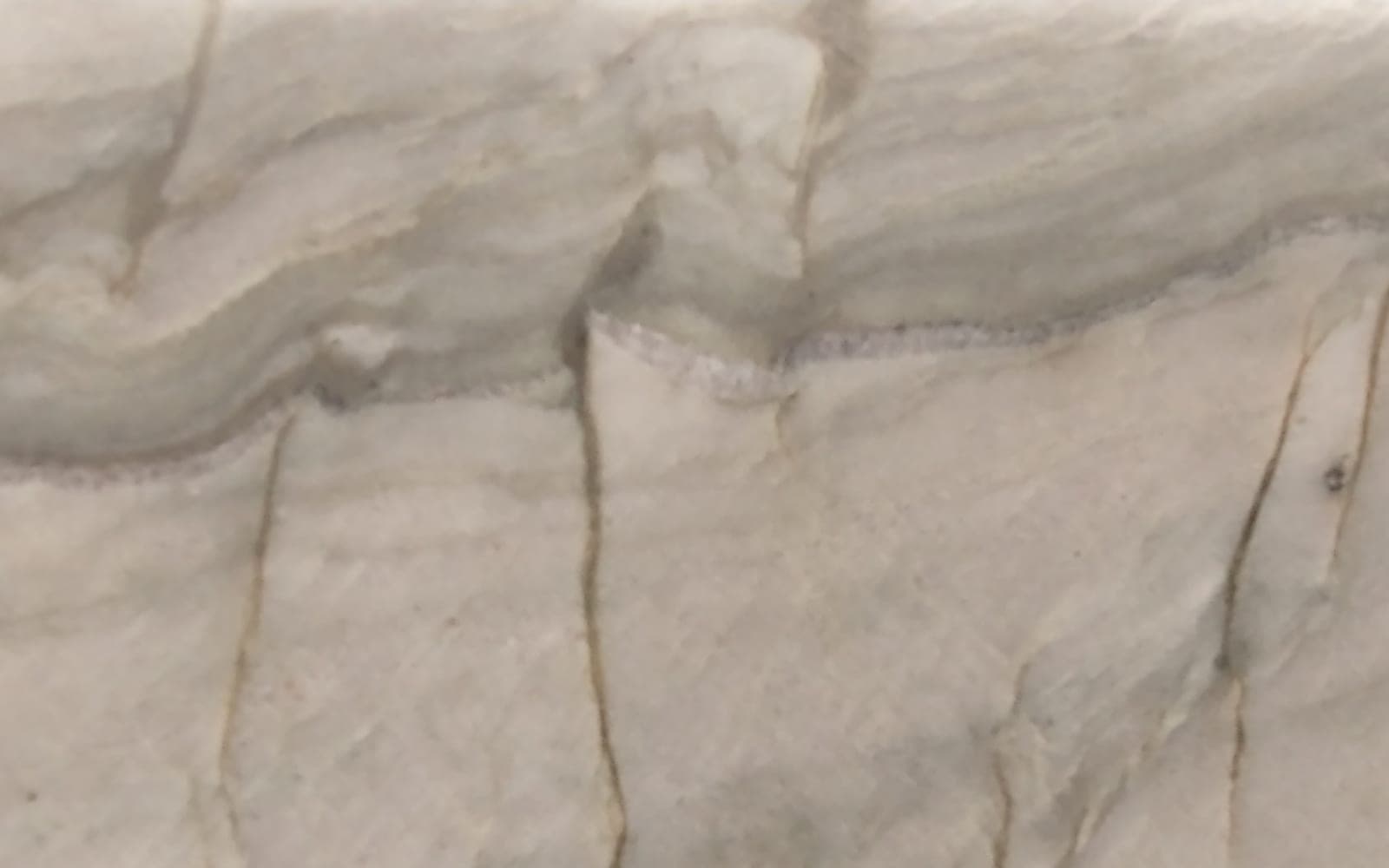
Fourth, natural stone has fissures. Some slabs come resin-treated and mesh-backed from the factory to hold them together. That is normal and not a defect, but it is worth knowing before you spec a delicate mitered waterfall edge, because a fissure that runs the wrong way through a miter is a problem you find in the shop.
Who It Is Wrong For
- Anyone who wants dead-uniform, repeatable, matches-the-showroom-sample white. That is engineered quartz. Go buy it and be happy.
- Anyone who wants high-drama, thick, black-and-grey veining. Taj Mahal is subtle. The gold is quiet. If you want theatre, this is the wrong stone.
- Small galley kitchens with three short runs. You pay for the big-slab advantage and then never use it.
- Anyone who will not seal it and will not let anyone else seal it either.
- Budgets where ninety to a hundred and twenty a foot installed breaks the kitchen. There is honest stone below that number. Spec it and move on.
What It Sits Next To
Cream and gold is a warm neutral, so it plays with almost anything, which is exactly why it gets abused. It goes soft and dull against cold grey-white painted cabinets. It sings against white oak, against unlacquered brass that is allowed to age, against a deep green or a black-brown painted island. Warm metals with warm stone. Do not fight the gold in the veining with nickel and chrome and a cool grey wall and then wonder why the kitchen feels flat.
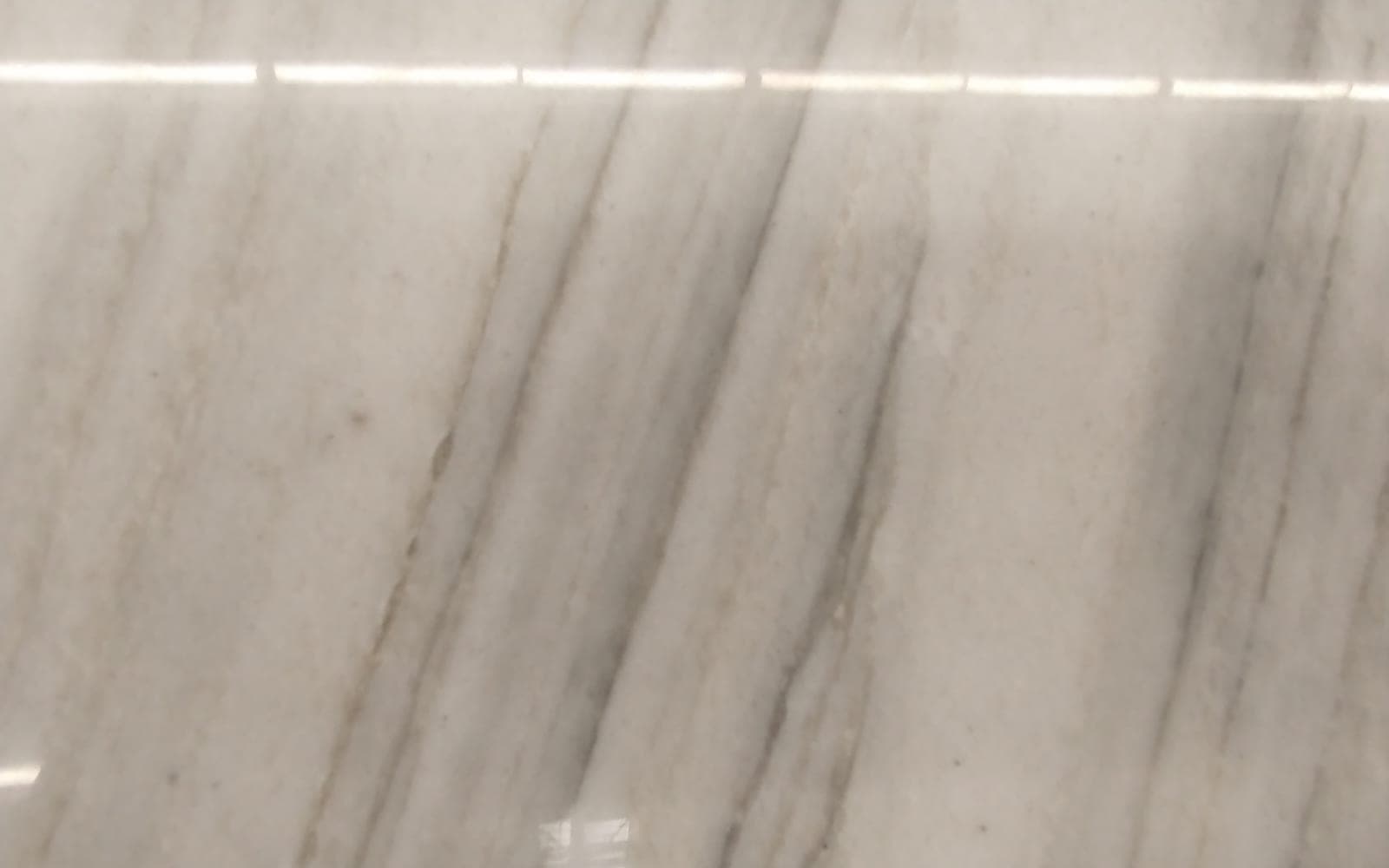
Finish matters too. Polished pushes the gold forward and reads formal. Honed calms it down and hides water spotting better in daily use, at the cost of showing oil a little more readily. Leathered gives you texture and a low sheen. There is no wrong answer, but pick it standing in front of the actual slab, not off a chart.
The Call
This is what people pick when nobody is watching. Not the trend stone, not the stone from the magazine spread. The one that looks like marble across the room and survives Tuesday night. Big slab, single piece, book-matched waterfall edge, sealed properly, cut by a shop that knows hard stone. That is the move.
Planning a kitchen around one slab?
If you want the island done in a single piece, the stone gets picked before the cabinets get drawn. Let's talk early.
Start a Project