
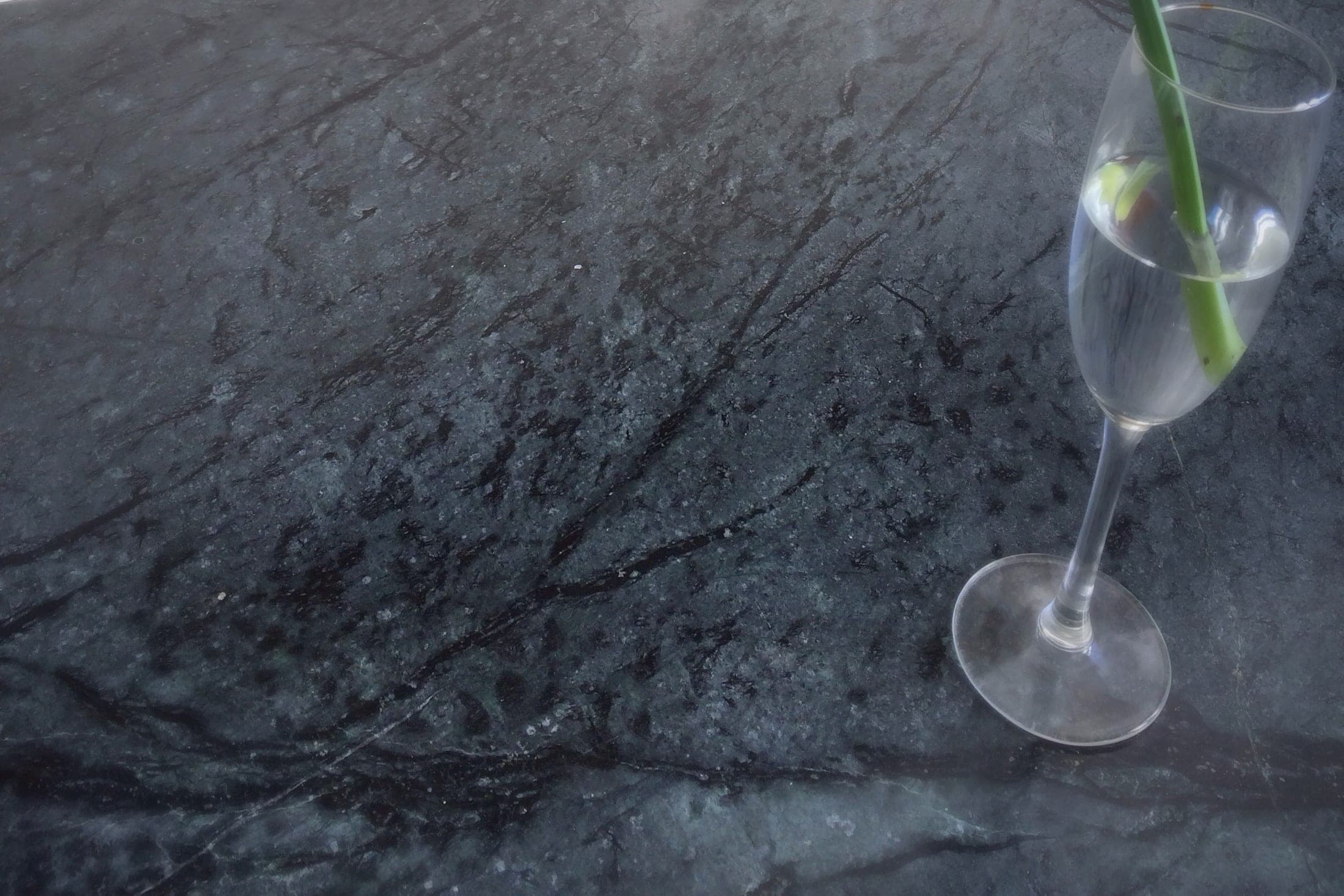
Spec it. It is the most honest counter material made in America, it costs $70 to $90 a square foot installed, and it has been coming out of the Green Mountains for over a century. That is the whole review. The rest of this is why.
What it actually is
Soapstone is talc-based. That is the key fact and everything else follows from it. Talc is soft, which is why the stone feels the way it does under your hand — dense and a little soapy, hence the name. It is also chemically inert. There is nothing in it for an acid to attack.
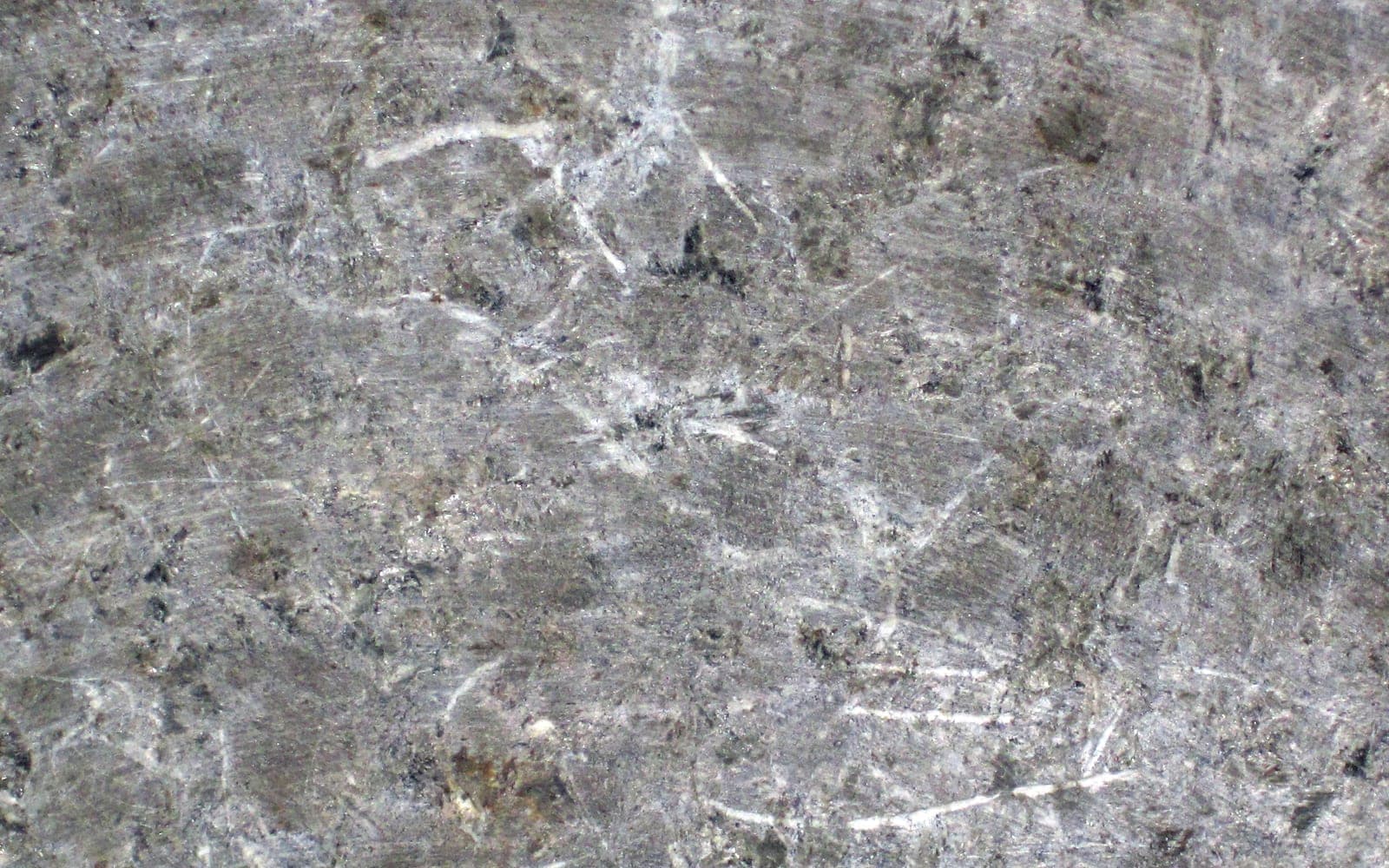
Out of the quarry it is a medium charcoal grey. Flat. A little dull. Clients see the raw slab and get nervous. Then you rub mineral oil into it and the stone deepens to near-black, the veining sharpens up hard against the field, and the nervous client shuts up. That is the moment soapstone sells itself. Every six months or so the homeowner re-oils it and the stone goes a little deeper still.
Why it beats the thing it replaces
Marble etches. Lemon, wine, vinegar, tomato — the acid eats the polish and leaves a dull ghost. Engineered quartz cannot take heat, because the binder holding it together is resin. Granite wants sealing on a schedule nobody keeps.
Soapstone does none of that. It cannot stain. It cannot etch. Acids do nothing. Hot pans do nothing — you can pull a pot off the range and set it down bare and walk away. The oil is cosmetic, not protective. That distinction matters and most people get it backwards.
“The oil is not a sealer. It is not protecting anything. It is just bringing the color up. Skip it for a year and the counter is fine — it is only lighter.”
— Beckett Stone
Where it fails
It scratches. That is the trade. Soft stone is soft stone, and a knife dragged across it leaves a light line. Here is the part that kills the objection: it sands out. Fine sandpaper, about three minutes, re-oil, gone. There is no other counter material where the homeowner fixes the damage themselves in the time it takes to make coffee.
The other failure mode is expectation. The patina is not uniform. It comes in unevenly — darker where hands land, around the sink, in front of the range. Some clients read that as character. Some read it as a defect. Find out which one you have before the slab ships.
- Scratches — real, but sand out in minutes with fine paper
- Uneven patina — it darkens where it gets used, and that is permanent
- Wrong client — anyone who wants the counter to look identical in year five
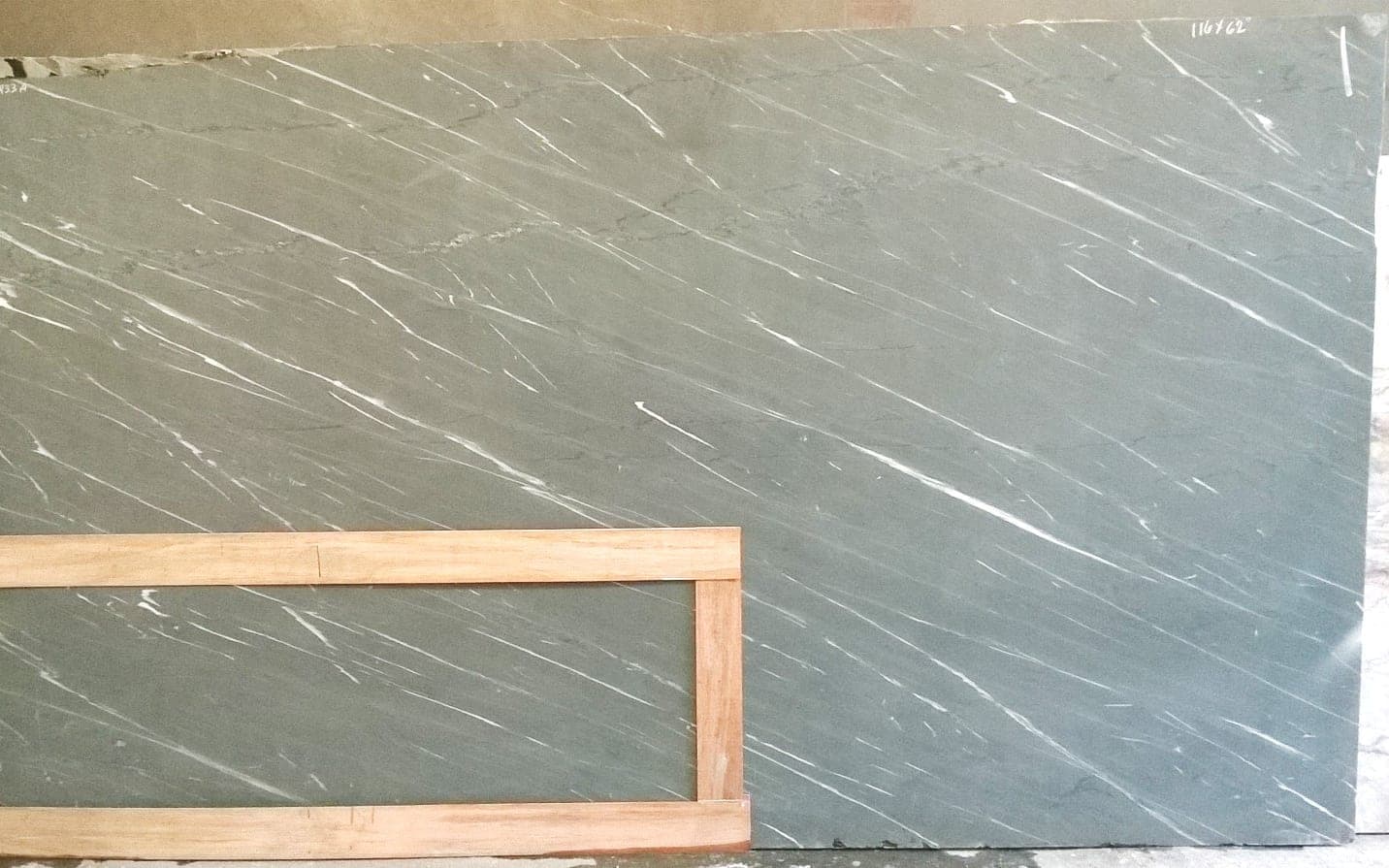
Look at the actual slab before you commit. Veining varies block to block, and the photo the yard sends is not the stone you are getting. That is true of any natural stone and it is true here.
What it sits next to
Unlacquered brass. Full stop. The brass goes brown and the stone goes black and the two age on the same clock. Unfinished white oak works. Painted inset cabinetry in a muddy green or a deep blue works. Plaster hoods work.
What does not work is high-gloss anything. Soapstone is a matte, quiet surface, and putting it against slab-front lacquer and polished chrome makes both materials look like a mistake. It also fights a busy backsplash. Give it a simple field tile or a slab backsplash of the same stone and let it be.
Who it is wrong for
The client who wants a white kitchen. Soapstone is dark and it gets darker. If the brief is bright, spec something else and stop.
It is also wrong for anyone who treats the counter as a finish rather than a tool. If a scratch is going to ruin someone's week, put in quartz and let them have the plastic. Soapstone is for people who cook, who set things down hard, who want a kitchen that looks like it has been lived in because it has. Farmhouse kitchens. Hardworking ranch houses. Clients who hate fussing over their counters.
The verdict
This material costs less than the quartz it replaces, needs no sealer, and looks like something your great-grandparents would have recognized. That combination is rare in a luxury build. Usually the honest choice is the expensive one.
It is the only counter I can name that genuinely gets better over time without anyone trying. Spec it. Oil it twice a year. Forget about it.
Working through a kitchen spec?
Bring us the plan and the brief. We will tell you what holds up and what does not.
Start a Project