

The numbers, before the excuses
Here is the schedule, plain. Interior remodel where we never touch drywall or the mechanical, electrical and plumbing systems: four to six months. A straightforward kitchen or bath inside that same scope can land at two to three. Full luxury home remodel, still no drywall or MEP work: six to eight months. Start pulling drywall and updating MEP and that becomes nine to twelve. Over roughly 4,000 square feet, put twelve to fourteen months on the calendar and stop negotiating with it.

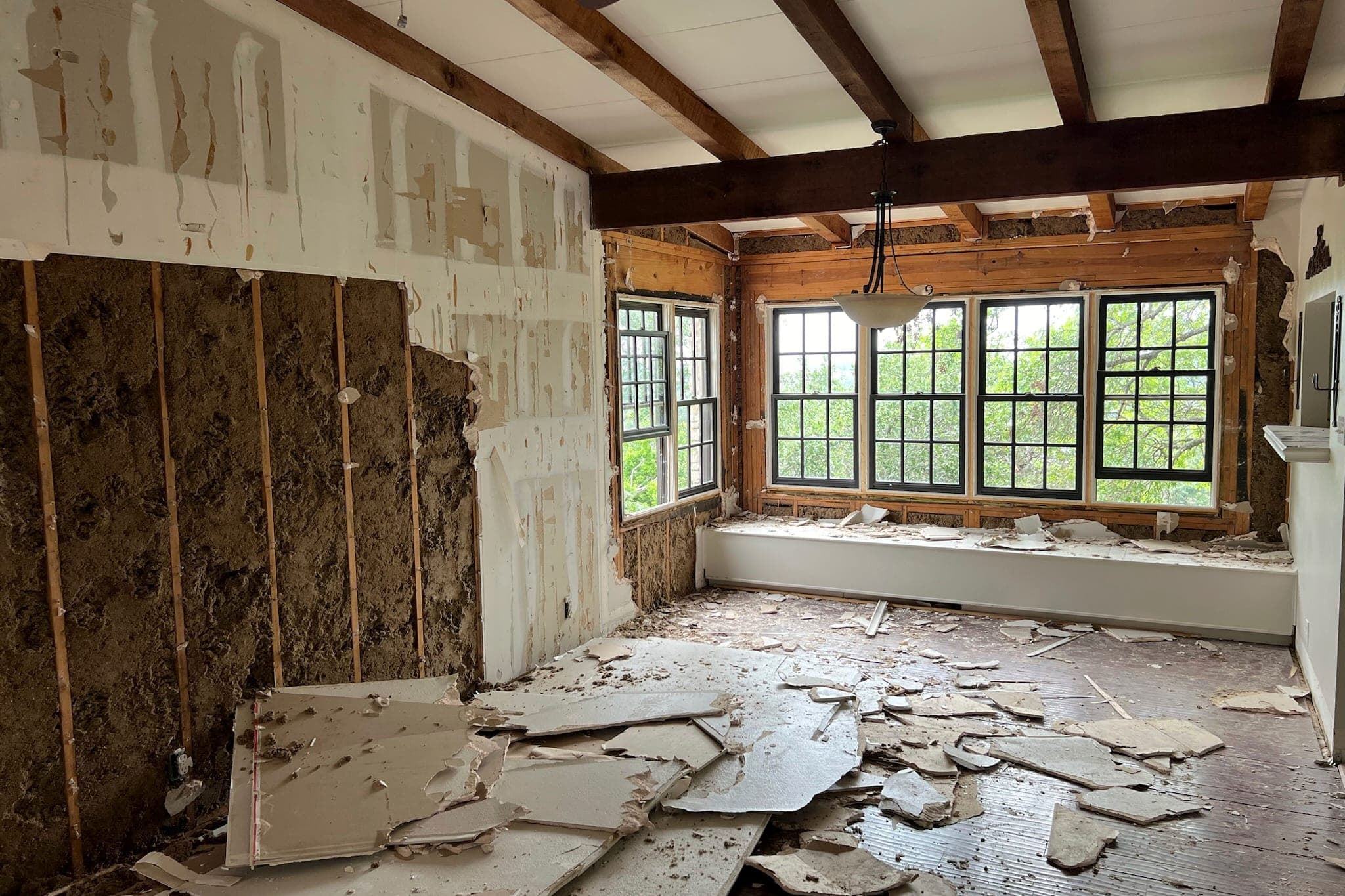
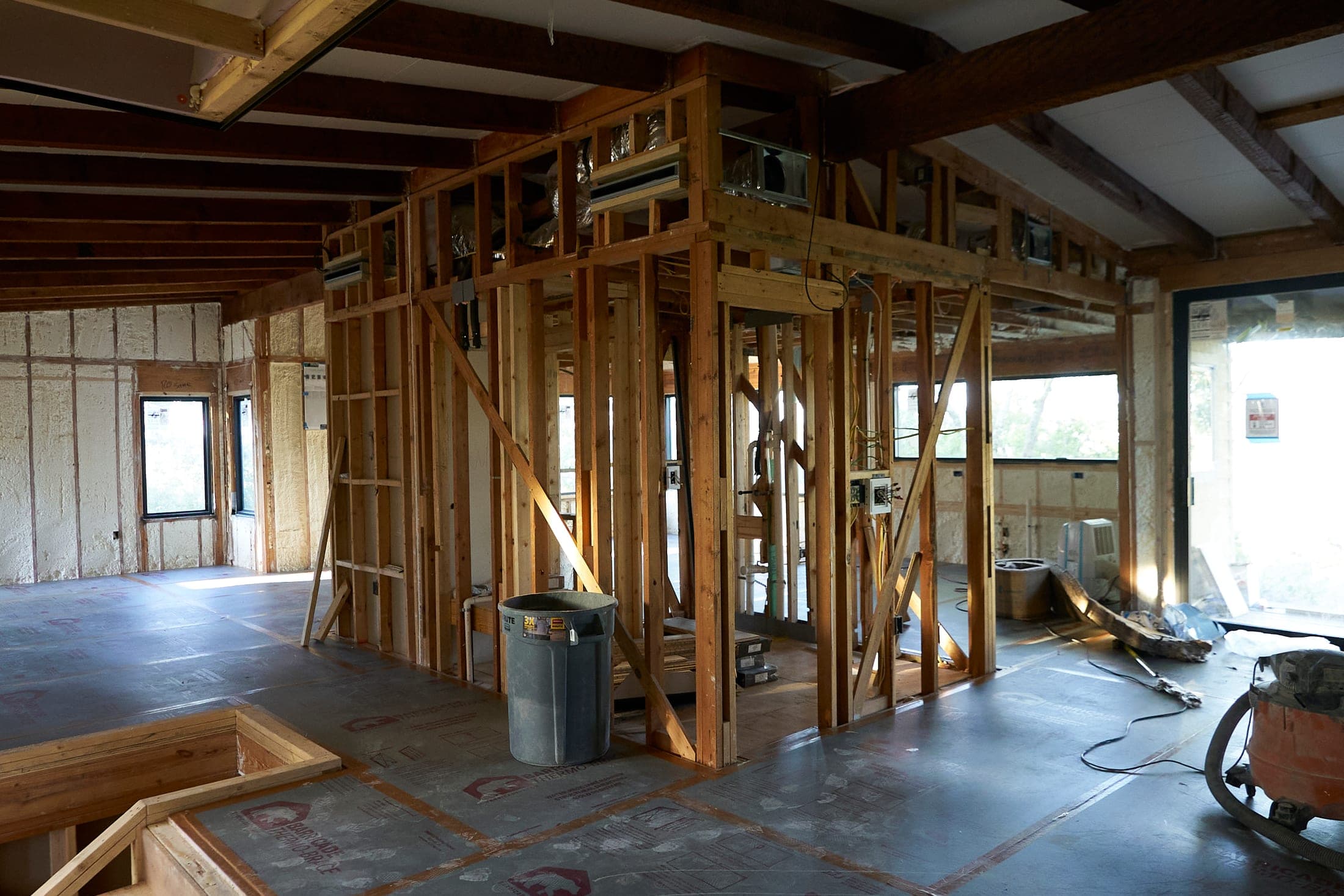
Notice the pattern. MEP is the hinge. Touching mechanical, electrical or plumbing adds at least two to three months to whatever the base number would have been. Not because anyone is slow. Because you are rebuilding the nervous system of a house while the skeleton stays standing, and that work happens in a sequence that will not compress no matter how many people you put in the building.
“Every remodel timeline is really two timelines: the one we can see, and the one that starts the day the walls come open.”
— Beckett Stone
The Westlake slab problem
Early-1970s houses in Westlake are gorgeous bones. They are also a specific set of mechanical facts. Copper water lines. Cast-iron plumbing in the slab. Both of those are common in that vintage and both are costly surprises, and here is the part nobody wants to hear: we cannot price them until the walls open up. Not won't. Cannot.
When the cast iron under the slab has to go, the fix is tunneling. We dig underneath the house and swap it for PVC. That tunneling alone can be a significant unplanned cost in a full renovation, and it happens in the middle of your schedule, not at the front where you had room to absorb it. This is the single line item that turns a nine-month remodel into something else.
So when a client asks for a move-in date at contract signing on a fifty-year-old house, the honest answer is a range with a footnote. Anyone giving you a date instead of a range on a renovation is either not looking hard enough or telling you what you want to hear.
Your painter is a schedule decision
People think the schedule gets set by demo and framing. The finish trades set it. Our best painter takes roughly eight weeks to paint a 4,000 square foot house. A production-level painter does it in about three.
Five weeks. On one trade. That is the trade you are making when you spec premium subs, and it is a real trade — speed for quality. There is no version where you get both. Pick one on purpose, at contract, not in month seven when you are tired of living in a rental.
- Interior remodel, no drywall or MEP: four to six months
- Straightforward kitchen or bath: two to three months
- Full luxury remodel, no drywall or MEP: six to eight months
- Full luxury remodel with drywall and MEP: nine to twelve months
- Anything over roughly 4,000 sq ft: twelve to fourteen months
- MEP scope added to any of the above: at least two to three months on top
The teardown gives you a date. The renovation gives you a range.
This is the conversation that matters and almost nobody has it early enough. On a teardown and new build, we can hand you a predictable schedule and a clean fixed-cost picture at the front. That is not marketing. It is a structural fact about the work. There is nothing behind the walls because there are no walls yet.
A full renovation carries budget and timeline uncertainty we cannot fully eliminate. The unknowns are literally encased in concrete.
Now, the renovation has a real argument. You reuse the original foundation and the structural bones, and that saves money — sometimes a lot of it. But those savings can be wiped out by what we find behind the walls. Cast iron in the slab. Copper lines that have to come out. One tunneling job and the math you built your whole decision on is a different equation.
How to actually plan this
Take the base number for your scope. Add the MEP adder if you are touching MEP, and on a house of a certain age you probably are. Then decide, in writing, whether you are buying speed or buying finish quality on the trades that set the tail end of the schedule. Then, if the house is old enough to have cast iron under it, hold a mental reserve for the slab. Not because it will happen. Because if it does, it happens mid-schedule and it does not care what you told your landlord.
The clients who are happiest at the end are the ones who signed knowing the range instead of clinging to the date. Certainty is a thing you buy with a teardown. On a renovation, you buy honesty instead. It is worth more.
Get a real range, not a comfortable date
Tell us the house, the age, and what you want to touch. We will walk you through the timeline honestly — including the parts we cannot price until the walls come open.
Start a Project